Blog
Solar shade call for expressions of interest and APER law
by Alexandre Guillemot 5 min read
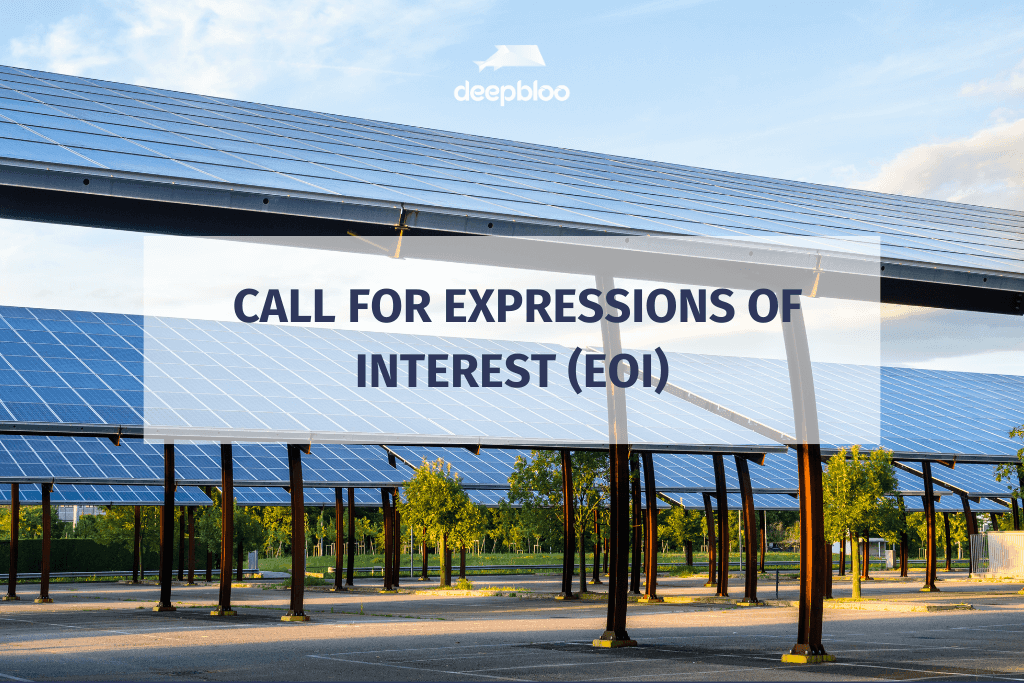
Solar shade EOIs are preliminary public procedures used by French local authorities to gather market technical input and pre-select candidates for mandatory photovoltaic parking lot canopy projects under the APER law
Call for expressions of interest (EOI) and calls for tenders for solar shades
Public authorities have an interest (and are obliged under Article 40 of the APER law) in enhancing the value of their land by installing photovoltaic structures on parking facilities. To meet the challenges of the energy transition, more and more local authorities are installing solar panels over parking areas, either as superimposed structures or as integrated shading systems.
The electricity generated can be consumed directly by nearby public buildings, injected into the ENEDIS grid for resale, or used under a hybrid model combining self-consumption with the sale of surplus energy.
These opportunities can take the form of calls for tenders (see current photovoltaic tenders and more specifically current solar shade tenders), or Calls for Expressions of Interest (EOIs). Understanding how to detect early-stage renewable projects is essential for companies operating in this sector. To explore this topic further, you can read:
How to identify renewable energy projects in France
Responding to an EOI creates an exclusive competitive advantage by restricting future tender eligibility to early participants.
How do Solar Shade EOIs help developers anticipate tenders?
An EOI generally precedes the award of a public contract, providing companies with the opportunity to position themselves upstream in the project. At this point, the public authority often does not yet have a detailed specification, which is precisely why it seeks input from market players.
By publishing an EOI on solar shades, the local authority aims to gather innovative proposals that will help refine its specifications and pre-select a limited number of candidates who will then be invited to participate in the formal tender. Only companies that responded to the EOI are eligible for the subsequent procurement process.
For a more complete understanding of the role of EOIs in the solar sector, you can also read: **Photovoltaic call for expressions of interest (EOI)
**and for upstream identification of solar sites:
How to identify photovoltaic projects in France
Which parking lots are mandatory for solar panels under the APER law?
Article 40 of the APER law mandates solar canopy installation on at least 50% of any outdoor parking surface exceeding 1,500 m²
The APER law (no. 2023-175 of March 10, 2023) aims to accelerate renewable energy deployment and places municipalities at the center of territorial planning. Article 40 makes it mandatory to install photovoltaic systems on outdoor car parks existing as of July 1, 2023, with a surface area exceeding 1,500 m². At least half of the parking area must be covered. The requirement also applies to new parking projects submitted after March 10, 2023.
Exceptions exist, such as when technical, architectural, environmental, safety or economic constraints make installation impossible; when the parking area is naturally shaded; or when existing renewable production already meets equivalent capacity.
For reference, since a standard parking space is around 11.5 m², this obligation applies to car parks of roughly 100 spaces.
Companies wishing to follow these regulatory-driven projects can refine their monitoring approach by consulting:
How to set up a French public procurement watch
Acceleration Zones (ZAEnR) and their importance for solar shades
ZAEnR status accelerates renewable energy permitting and prioritizes financial subsidies for solar shade infrastructure.
To help meet national renewable energy targets, the APER law also requires municipalities to define Renewable Energy Acceleration Zones (ZAEnR). These zones are locations where local authorities wish to encourage renewable energy deployment through faster permitting, priority processing, and sometimes more favorable financial arrangements.
ZAEnR therefore help identify the parking areas most suitable for photovoltaic shading projects. For developers and EPC contractors, this early visibility makes it possible to anticipate where EOIs and tenders for solar shades are likely to appear.
To understand how ZAEnR shape future solar opportunities, you can read:
Renewable Energy Acceleration Zones (ZAEnR) – how to anticipate future tenders
How to monitor APER Law opportunities:
- Filter municipal council reports for ZAEnR deliberations.
- Identify parking surfaces > 1,500 m² via satellite mapping or cadastre.
- Track EOI publications on regional platforms before formal tender launch.
- Set automated alerts for “ombrières photovoltaïques” keywords in Deepbloo.
In summary:
- Article 40 mandates solar shading for parking lots over 1,500 m².
- EOIs serve as pre-selection filters for high-value public contracts.
- ZAEnR zones pinpoint priority areas for faster permitting.
- Deepbloo automates the detection of early-stage signals to bypass traditional tender competition.
How Deepbloo supports EOI and tender monitoring for solar shades
Deepbloo enables users to track EOIs and tenders in just a few clicks and receive daily notifications aligned with their business. By combining regulatory insight (APER law), Acceleration Zones (ZAEnR), and structured tender monitoring, companies can identify opportunities long before projects reach the tender stage.
To learn how data and automation strengthen this process, you may also consult:
How AI is revolutionizing tender monitoring in France and internationally
If you would like to discover how Deepbloo can help you identify EOIs and tenders related to solar shade projects, you can request a demo here.
Frequently asked questions
Is solar shading mandatory for all parking lots in France?
Article 40 of the APER law only mandates solar canopies for outdoor parking lots exceeding 1,500 m², covering at least 50% of the surface.
What is the difference between an EOI and a tender for solar shades?
An EOI is a preliminary market consultation used to refine specifications, whereas a tender is the formal competitive bidding process for contract award.
How many parking spaces trigger the APER law obligation?
Roughly 130 spaces. Since a standard space is 11.5 m², the 1,500 m² threshold applies to car parks of this capacity.
Can a company bid on a solar shade tender without responding to the EOI?
Often no. Public authorities frequently use the EOI to pre-select a limited list of candidates eligible for the final procurement phase.